



.png)
The Art of Standing Out Online
I feel like wherever you go right now, someone's telling you the same thing. Your industry is crowded, standing out online is hard, and the answer (apparently) is to just be consistent.
Just. Be. Consistent.
As if posting three times a week into a saturated market is the only thing standing between you and success. As if the problem is that you just haven't shown up enough, and not that nobody knows where to look when you do. (Cool advice, truly. Life-changing stuff.)
But this is not a new problem. Theatres have been figuring out how to direct an audience's attention since literally ancient Greece — and the techniques they developed work just as well on Instagram as they do downstage centre.
I've spent years as a theatre director, and I bring everything I learned there into the world of marketing and branding. So let's talk about how to get people to actually look at you in a world that is screaming for their attention 24/7.
Lesson 1: Use contrast to direct attention (the spotlight technique)
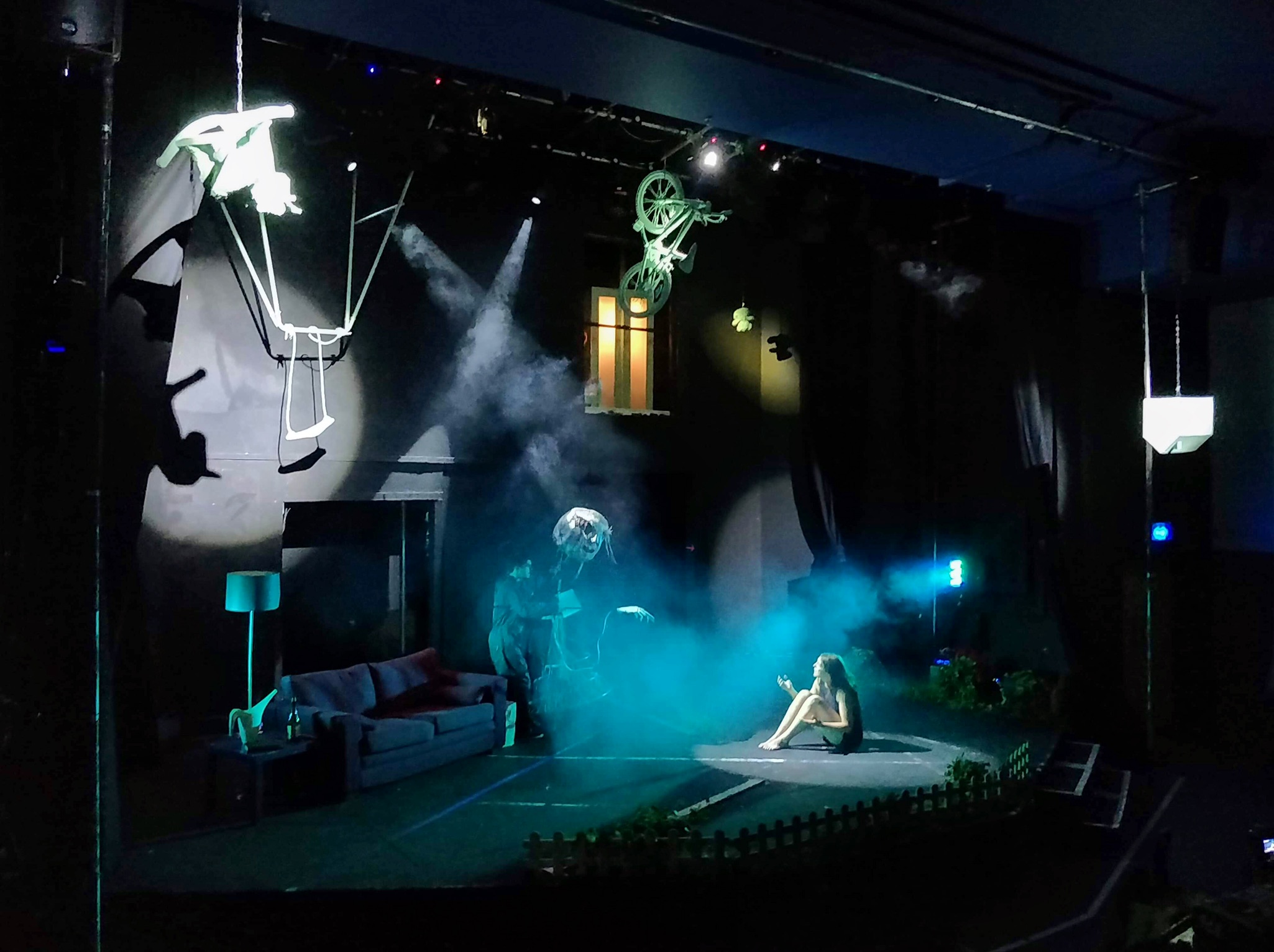
Picture a darkened stage. Ten actors, all moving, all making noise. Now — one of them steps forward into a spotlight. Where does your eye go?
There. Obviously.
It works in every configuration: if everyone's screaming and one person sits down in silence, you look at the silent one. If a hundred people are staring at one actor, your gaze follows without you even deciding to. If everyone's in black and one person walks in wearing red — well. You're not looking at the people in black, are you.
Online, this is the pattern interrupt. When every video in someone's feed is fast cuts, trending audio, and someone pointing aggressively at text overlays — doing the opposite is how you step into the light. A whispered video. A silent one. A single sentence against a plain background.
In theatre we call this a soliloquy. One actor breaks from the scene, steps toward the audience, speaks directly to them while everyone else freezes. It works because it's unexpected, and unexpected things get watched.
Lesson 2: Guide your audience's eye with visual hierarchy (blocking)
Theatre directors use triangles. When you arrange actors in a triangle on stage, the point of that triangle becomes the focal point. It’s specific design to draw your eye,
You can do the same on your website, your sales pages, and with your content. Three equally-sized buttons? Three identical columns of text? People won't know where to look, so they'll look nowhere. Make one element bigger, bolder, and a different colour — and suddenly there's a hierarchy. People follow those without thinking about it.
If you want to stand out online, start with your own pages. Figure out what matters most, then make it look like it matters most.
Lesson 3: Stop rushing to the point (tension with pause)
In theatre, a well-timed pause is one of the most powerful tools an actor has. Build and build toward a moment….then stop. Hold it. Let the silence sit there. When the payoff arrives it lands completely differently than it would have if you'd just rushed to it.
Online this is about pacing — specifically, resisting the urge to get to the point immediately because you're scared of losing someone. (That's usually what loses them, by the way.)
Let the setup breathe. Use white space. Put a short line right before the thing you actually want to land. The buildup is what makes the payoff hit.
The internet is the biggest, loudest, most crowded stage in human history. You're already on it whether you like it or not.
So you might as well direct the show.

